There are people you remember almost instantly.
Not necessarily because they were the smartest person in the room.
Or the loudest.
Or even the most visible.
But something about them stayed.
Maybe it was the way they spoke.
The way they carried themselves.
The calmness in their presence.
The clarity in how they saw the world.
And then there are people who seem to be everywhere online.
Posting constantly.
Sharing every achievement.
Trying very hard to stay visible.
Yet nothing about them really lingers.
This is where the conversation around personal branding often becomes incomplete.
People think personal branding is about:
- showing up more
- posting more
- becoming more visible
- learning how to market yourself
But long before personal branding became an online industry, people were already building impressions of each other quietly and instinctively.
The truth is, people are always reading you.
Even before they fully understand what you do.
The Difference Between Being Seen And Being Remembered
A lot of people confuse visibility with connection.
But the two are very different things.
You can be highly visible and still leave no real impression.
Because attention alone does not build memory.
This is the real difference between personal branding and self promotion.
Self-promotion asks:
“How do I get people to notice me?”
Personal branding asks:
“What stays with people after they do?”
That shift changes everything.
Because people rarely remember every post you make.
They remember how your presence felt.
Whether you seemed grounded.
Whether your communication felt clear.
Whether your identity felt believable.We don’t remember people only through information.
We remember them through perception.
People Are Constantly Interpreting Signals
One of the most interesting things about human behavior is that people rarely consume others objectively.
They interpret.
The way you dress.
The way you write.
The pauses in your speech.
The confidence in your body language.
The kind of conversations you participate in.
Even the things you choose not to say.
All of it communicates something.
This is why personal branding has far more to do with psychology than most people realize.
Because people are not simply observing your content.
They are trying to understand:
- who you are
- what you value
- whether you feel trustworthy
- whether your identity feels coherent
And these judgments happen quietly, emotionally, almost instantly.
Why Some People Feel Instantly Credible
You’ve probably come across people online who feel trustworthy within moments.
Not because they appear perfect.
In fact, perfection often creates distance.
What creates connection is coherence.
Their presence feels aligned.
The way they think, speak, present themselves, and interact with people all seem to belong to the same person.
There is no friction in how they are experienced.
And that consistency creates trust.
This is where authentic personal branding becomes important.
Not authenticity as performance.
Not curated vulnerability.
Real authenticity is quieter than that.
It’s when someone’s external presence feels emotionally aligned with who they actually are.
People can sense that alignment more than we think.
The Internet Has Made People More Emotionally Observant
Over time, audiences have become highly sensitive to performance online.
You can feel when someone is trying too hard to appear impressive.
And strangely, that effort often creates distance instead of connection.
Because people are not only evaluating success anymore.
They are evaluating emotional believability.
This is why many highly polished personal brands still fail to create trust.
The visuals may look refined.
The strategy may be correct.
The consistency may be there.
But something feels missing underneath it.
Usually, it’s substance.
A Personal Brand Cannot Exist Without A Person
One of the biggest misunderstandings around branding is treating it as something external.
But your personal brand identity is deeply connected to who you are beyond the internet.
Your:
- emotional intelligence
- self-awareness
- curiosity
- cultural understanding
- communication style
- perspective on people
…all shape how others experience you.
This is why two people can talk about the exact same topic online, yet one feels deeply credible while the other feels forgettable.
One is communicating information.
The other is communicating perspective.
And perspective usually comes from lived experience and observation, not performance.
Online Presence vs Real Presence
Some people build an extremely polished online identity but feel disconnected in real life.
Others are deeply insightful in person but struggle to express themselves digitally.
The strongest personal branding strategy reduces this gap.
Because trust grows when your online and offline presence feel emotionally consistent.
People trust what feels coherent.
Not just aesthetically coherent, but psychologically coherent.
The internet may introduce someone to your identity.
But eventually, your real presence confirms whether that identity feels true.
The Problem With Performative Branding
A lot of branding today feels like imitation.
Not because people lack talent, but because they begin building visibility before building self-understanding.
Without depth underneath it, branding becomes performance.
And audiences eventually feel that emptiness.
You can sense when someone has carefully studied how to appear valuable without actually developing depth as a person.
Because depth changes communication.
It changes the way someone observes the world.
The way they listen.
The way they carry nuance.
The way they understand people.
And these things cannot be replicated through aesthetics alone.
Expert Insight: What Actually Makes People Memorable
The people we remember are rarely the loudest ones.
They’re usually the ones who feel the most certain within themselves.
Not arrogant.
Not performative.
Just internally clear.
Their communication feels grounded because their identity feels grounded.
And that clarity creates recognition.
This is why strong personal brand positioning is not about creating a larger personality.
It’s about removing confusion.
When people understand you clearly, they remember you more easily.
Common Mistakes People Make With Personal Branding
Trying To Look Impressive Instead Of Understandable
People connect faster with clarity than performance.
Building Visibility Before Building Identity
Without self-awareness, branding quickly feels borrowed.
Confusing Aesthetics With Presence
Beautiful visuals attract attention.
But emotional depth creates memorability.
Speaking To Everyone
The more generic the communication becomes, the less emotionally specific it feels.
Ignoring How People Experience You
Most people focus only on expression.
Very few think about interpretation.
How To Build An Authentic Personal Brand
If you’re wondering how to build an authentic personal brand, it starts with becoming more aware of yourself before becoming more visible online.
Ask yourself:
- What do people consistently feel around me?
- What perspective naturally comes to me?
- What conversations genuinely matter to me?
- What emotional impression does my presence leave behind?
Strong personal brands are usually built by people who understand themselves deeply enough to communicate with clarity.
Not by people trying to imitate visibility.
Recognition Lasts Longer Than Attention
Attention is temporary.
Recognition stays.
And there’s a difference between people seeing your content and people remembering your presence.
Because ultimately, people don’t remember every detail about what you posted.
They remember:
- whether your identity felt real
- whether your communication felt thoughtful
- whether your presence felt emotionally believable
That is what creates trust.
And trust is what makes a personal brand last.
Conclusion
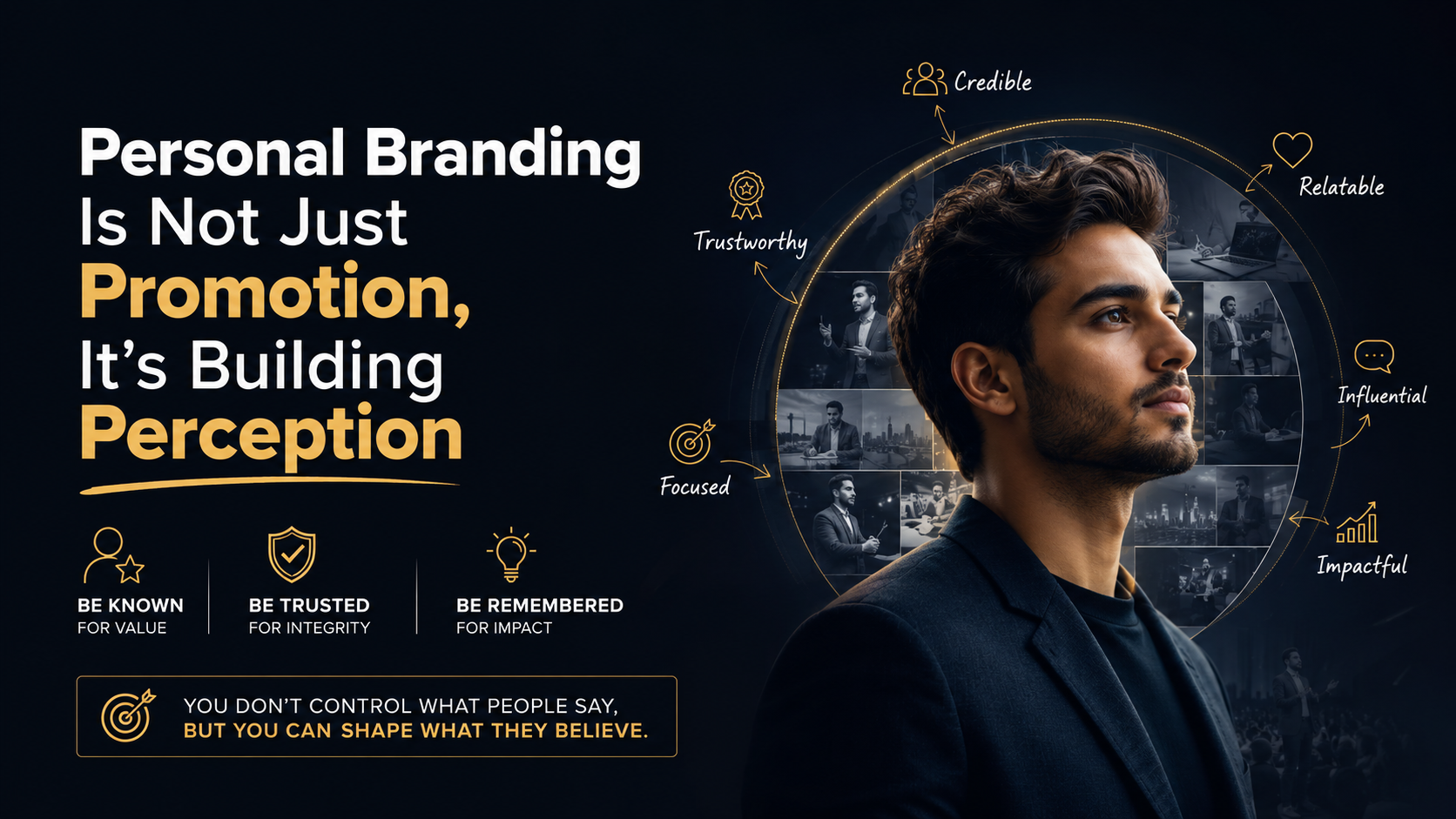
Personal branding is not just promotion.
It is the quiet process of shaping perception over time.
It’s the space between:
- who you are
- how you express yourself
- and how people emotionally experience you
Because long after algorithms change and trends disappear, people still remember what felt real.
And in a world full of performance, clarity combined with authenticity becomes unforgettable.
FAQs
1. What is the difference between personal branding and self promotion?
Self-promotion focuses on gaining attention, while personal branding focuses on shaping perception and long-term trust.
2. Why is authenticity important in personal branding?
Authenticity creates emotional trust and makes your identity feel believable and consistent.
3. How do people form impressions online?
People interpret signals through communication style, visuals, behavior, consistency, and emotional presence.
4. What makes a personal brand memorable?
Clarity, emotional alignment, consistency, and genuine perspective make personal brands more memorable.
5. Can aesthetics alone build a strong personal brand?
No. Aesthetics may attract attention, but substance and authenticity create trust and recognition.
6. How do I build an authentic personal brand?
Focus on self-awareness, perspective, emotional intelligence, and communicating with clarity rather than performance.
7. Why do some personal brands feel performative?
Because they prioritize visibility and image before building depth, identity, and alignment.