Not long ago, being noticed was something that happened naturally.
You were known by your family, your neighborhood, your colleagues, or the people you met along the way. Recognition came from relationships, not reach.
Today, recognition has become measurable.
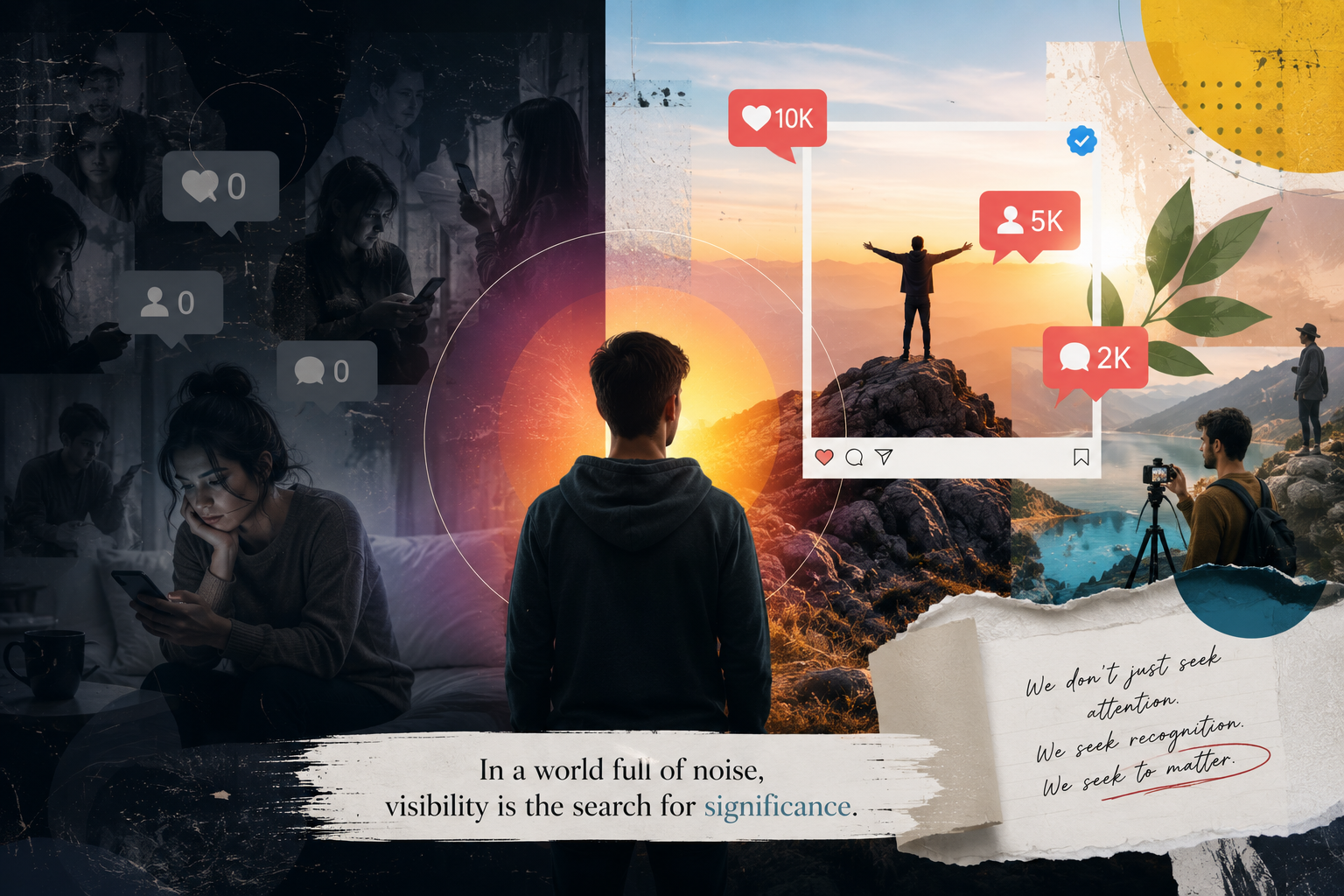
A post with 10 likes feels different from one with 10,000. A profile with thousands of followers carries an invisible weight. Views, shares, comments, and engagement have quietly become signals of significance. Somewhere along the way, visibility stopped being something we experienced and became something we pursued.
But why?
Why has being seen become one of the strongest human desires of our time?
The answer isn’t simply social media. It’s psychology.
Visibility Has Always Been Human
Before we had smartphones, we had tribes.
In every community throughout history, being noticed wasn’t about fame. It was about survival. Being accepted by the group meant protection, resources, belonging, and identity. Being ignored often meant isolation.
Our brains haven’t forgotten that history.
Today, those survival instincts are responding to digital environments instead of physical ones.
A notification feels rewarding because our minds interpret attention as acknowledgment. A comment feels meaningful because it signals that someone noticed us. The technology is new, but the psychology isn’t.
This is the foundation of visibility psychology. We aren’t wired to chase algorithms. We’re wired to seek recognition.
The Shift From Being Known to Being Seen
Something subtle has changed over the last decade.
People once asked,
“Who knows me?”
Now they often ask,
“Who can see me?”
There’s a difference.
Being known requires understanding, Being seen only requires attention.
Social media has blurred those two experiences, making visibility feel like connection even when genuine relationships haven’t grown at all.
That’s why many people continue posting, refreshing, and checking engagement—not because they’re seeking vanity, but because visibility has become a modern language of reassurance.
The Attention Economy Doesn’t Sell Products. It Sells Presence
Every platform competes for one thing: your attention.
But in return, it also teaches you to compete for everyone else’s.
This is the reality of today’s attention economy.
Every creator, professional, founder, artist, and entrepreneur is trying to occupy a small space in someone else’s scrolling experience.
The challenge isn’t just producing content anymore. It’s remaining visible in an environment where everyone else is trying to do the same. As attention becomes scarcer, visibility starts feeling more valuable. And what becomes valuable is often mistaken for what is meaningful.
Why Attention Feels So Rewarding
Imagine spending hours creating something—a photograph, an article, a video, or even a thoughtful caption.
Then imagine nobody responds. Objectively, the quality of your work hasn’t changed. Yet emotionally, it suddenly feels different.
This happens because human beings naturally associate response with relevance.
When people engage, we feel acknowledged.
When they don’t, our minds sometimes interpret silence as rejection.
This is how social validation quietly shapes our emotional lives. Validation isn’t inherently unhealthy. The problem begins when external recognition becomes the primary source of internal confidence.
When Visibility Starts Becoming Identity
There was a time when your identity was shaped mostly by your experiences. Today, it is increasingly influenced by your digital reflection.
Many people don’t simply ask themselves, “Who am I?”
They begin asking, “How am I being perceived?” That shift changes everything.
Your choices become influenced by what photographs well.
Your opinions become influenced by what performs well.
Your personality slowly adapts to what receives approval.
Without realizing it, your online identity begins negotiating with your real one.
The danger isn’t pretending to be someone else. It’s slowly forgetting who you were before everyone started watching.
The Strange Pressure of Digital Visibility
Visibility sounds glamorous until it becomes expected.
The moment people begin noticing you, another pressure quietly appears.
You feel responsible for staying visible.
You keep posting because disappearing feels risky.
You continue sharing because silence feels like losing momentum.
You begin documenting experiences while they’re still happening.
Sometimes, instead of living a moment, you’re already imagining how it will appear online.
This is one of the hidden costs of digital visibility. Being seen can become exhausting when it starts replacing simply being present.
Why Visibility Matters in Personal Branding But Isn’t the Goal
For professionals, entrepreneurs, and creatives, visibility is important.
People cannot trust work they’ve never discovered.
This is why why visibility matters in personal branding is a valid question.
Visibility creates opportunities.
It opens conversations.
It introduces your expertise to new audiences.
But visibility alone cannot sustain trust. Someone may discover you because of one post. They stay because of your consistency, your perspective, and the value you bring.
Being visible gets you noticed. Being meaningful gets you remembered.
The Difference Between Performing and Expressing
There’s an important distinction many people overlook.
Expression begins with identity. Performance begins with expectation. When you express yourself, you’re communicating something that’s already true.
When you perform, you’re constantly adjusting yourself based on what you think others want to see.
Over time, performance becomes exhausting because it requires constant maintenance.
Expression, on the other hand, feels sustainable because it comes from clarity rather than approval.
This is where healthy personal branding begins—not with visibility, but with authenticity.
Expert Insight: Recognition Is a Human Need, Not a Weakness
It’s easy to criticize people for wanting attention but that criticism often misses something fundamental.
The desire to be seen is deeply human.
Children seek eye contact before they learn language.
Friends seek acknowledgment in conversations.
Employees seek appreciation at work.
Artists seek audiences.
Founders seek customers.
Recognition itself isn’t the problem.
The question is where we seek it and how much power we give it. When self-worth depends entirely on external visibility, attention becomes addictive.
When visibility becomes an extension of genuine purpose, it becomes meaningful.
Maybe We Don’t Want Fame. Maybe We Just Want Witnesses.
The modern craving for visibility isn’t really about becoming famous. Perhaps it’s about wanting proof that our lives matter.
That our ideas reached someone.
That our work made a difference
That our existence left a trace
Seen through that lens
chasing visibility isn’t always vanity.
Sometimes it’s simply another way of asking, “Did anyone notice I was here?”
Conclusion
We often assume that people crave visibility because they love attention.
In reality, most people are searching for something much quieter.
Recognition.
Belonging.
Significance.
The digital world has simply given those timeless desires a new stage.
Understanding the psychology of online visibility reminds us that attention is temporary, but genuine connection lasts much longer.
Perhaps the healthiest goal isn’t to become the most visible person in the room.
It’s to become someone whose presence means something once they’ve been seen.
FAQs
1. What is visibility psychology?
It explores why people naturally seek recognition, attention, and acknowledgment from others.
2. Why do people want attention on social media?
Attention often satisfies psychological needs for belonging, validation, and recognition.
3. How does social validation affect identity?
External approval can influence confidence, decision-making, and how people perceive themselves.
4. Why is visibility important in personal branding?
Visibility helps people discover you, while credibility and consistency help them trust you.
5. What is the attention economy?
It’s a digital environment where platforms and creators compete for people’s limited attention.
6. Can too much digital visibility be harmful?
Yes. Constant pressure to stay visible can lead to stress, comparison, and emotional exhaustion.
7. How can you build healthy visibility online?
Focus on sharing meaningful ideas consistently rather than chasing validation or trends.