There was a time when loneliness was easy to recognize.
It looked like an empty room, unanswered phone calls, weekends with no plans, or long evenings spent waiting for someone to reach out.
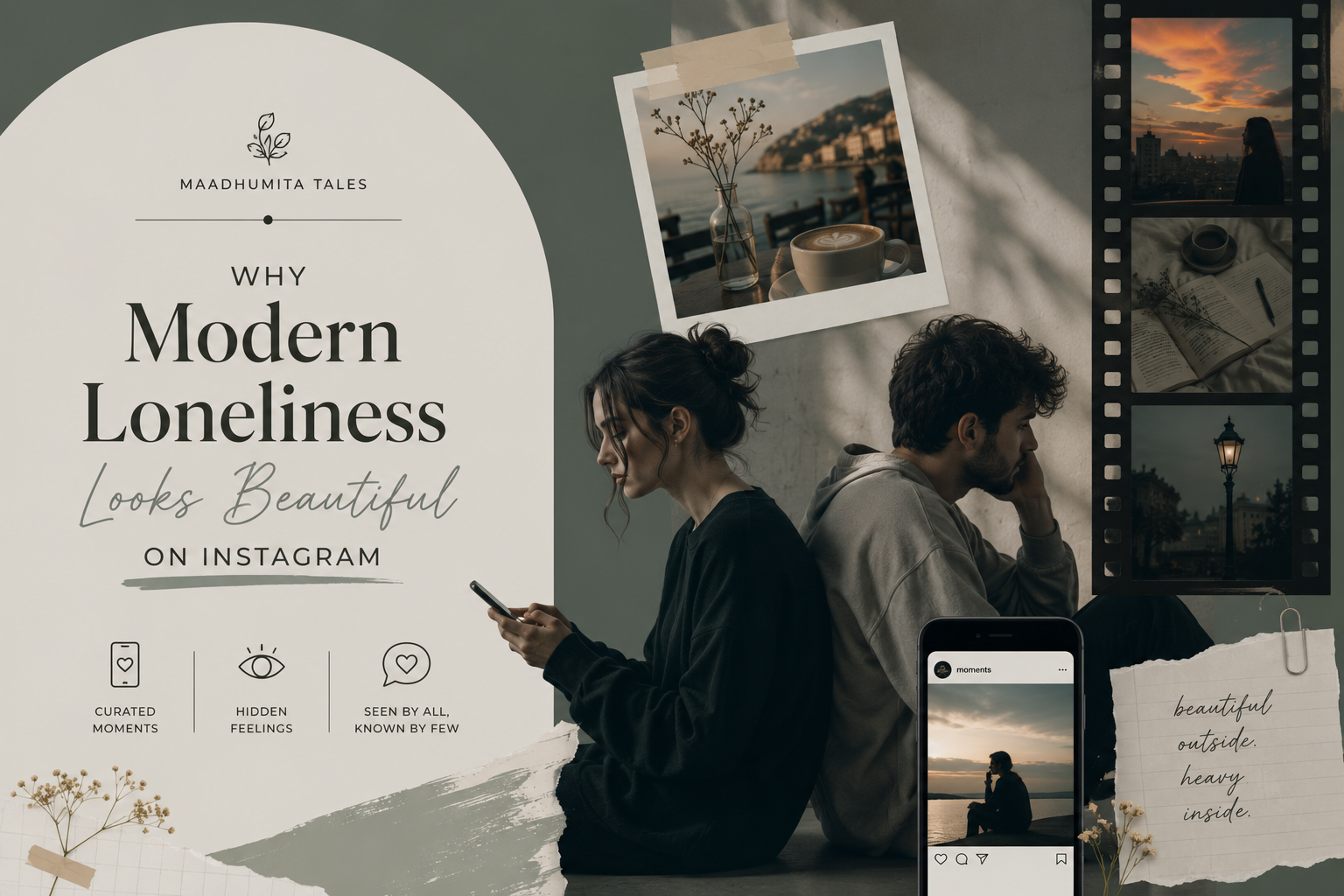
Today, loneliness has learned how to dress well.
It travels to beautiful cafés, poses against sunsets, shares perfectly edited vacations, and smiles through carefully chosen filters. It doesn’t always look empty anymore. Sometimes, it looks enviable.
This is one of the strangest contradictions of the digital age. We have never documented our lives more, yet many people have never felt more unseen.
That contradiction sits at the heart of social media loneliness.
When Looking Connected Isn’t the Same as Feeling Connected
Scroll through Instagram for five minutes.
You’ll see birthdays surrounded by friends, morning routines that feel cinematic, dinner tables full of laughter, airport windows, sunsets, handwritten journals, flowers on coffee tables, and countless moments that seem deeply fulfilling.
What you rarely see are the moments that happen after the phone is put away.
The silence.
The uncertainty.
The overthinking.
The feeling that despite being constantly surrounded by people online, nobody really knows you.
This is the quiet reality of digital loneliness. It doesn’t come from being alone. It comes from feeling emotionally disconnected while appearing socially connected.
Instagram Didn’t Create Loneliness. It Changed Its Appearance.
Humans have always experienced loneliness what has changed is how we perform it.
Instead of withdrawing from the world, many people now stay highly visible within it. They continue posting stories, sharing updates, liking photos, and engaging with others while privately feeling isolated.
This is why the relationship between social media and loneliness is so complex. The platforms themselves are not the problem. The problem lies in confusing visibility with intimacy.
Being watched is not the same as being understood having an audience is not the same as having companionship.
The Beauty We Curate Often Protects What We Hide
Every Instagram profile tells a story but stories are edited.
We choose the moments that feel meaningful, attractive, or worth remembering. We crop out the uncomfortable conversations, the insecurities, the failures, and the emotional messiness that makes us human.
Over time, these edits become a curated lifestyle—not necessarily because we want to deceive others, but because we want to preserve a version of ourselves that feels easier to carry.
Sometimes, the profile becomes less about documenting life and more about protecting it.
The result is a strange paradox. The more beautiful the story becomes online, the harder it can become to admit when life feels anything but beautiful offline.
The Psychology Behind Curated Lives
The psychology behind curated Instagram lives isn’t rooted in vanity as much as it is in belonging.
Human beings naturally seek acceptance.
We instinctively present the parts of ourselves that are more likely to be appreciated by others. Social media simply amplifies that instinct.
Instead of asking, “Who am I?”
The question slowly becomes, “Which version of me will receive the most approval?”
Without realizing it, identity begins responding to algorithms instead of authenticity this is where image quietly replaces experience.
Why Beautiful Content Can Still Leave You Feeling Empty
Have you ever closed Instagram and somehow felt like your own life had become smaller?
Nothing around you actually changed.
Your room stayed the same.
Your friends stayed the same.
Your achievements stayed the same.
Yet something inside shifted.
That feeling doesn’t happen because someone else’s life is necessarily better. It happens because the human brain naturally compares incomplete information.
We compare our ordinary Tuesday afternoon to someone else’s carefully selected highlight, we compare our private emotions to someone else’s public moments.
It isn’t a fair comparison, but psychologically, it feels real.
This is one of the hidden emotional effects of Instagram culture. It quietly changes the standards by which we measure ourselves.
Aesthetic Doesn’t Always Mean Authentic
There is nothing wrong with beautiful photography, There is nothing wrong with thoughtful styling or visually pleasing content.
Aesthetics have always been a form of expression. The problem begins when aesthetics become a substitute for emotional honesty.
A perfectly arranged breakfast cannot communicate loneliness.
A beautifully edited travel reel cannot reveal anxiety.
A smiling portrait cannot explain emotional exhaustion.
When appearance consistently replaces experience, people stop seeing each other and start seeing performances.
Loneliness Has Become Easier to Hide Than Ever Before
Ironically, social media has made disappearing unnecessary you no longer have to withdraw from the world to feel invisible.
You can post every day.
Reply to comments.
Share updates.
Attend events.
Look successful.
And still wonder whether anyone truly knows you.
This is why why social media makes people feel lonely cannot be answered by screen time alone.
The deeper issue is emotional presence. Technology has made communication effortless. It has not made connection effortless.
What We Are Really Searching For
Most people aren’t chasing likes They’re chasing reassurance They want to feel noticed without performing. Accepted without editing.
Understood without constantly explaining themselves.
Behind every carefully chosen photograph is often a much simpler human desire: “I hope someone sees me.”
Not my outfit.
Not my vacation.
Not my morning routine.
Me.
Expert Insight: The Difference Between Visibility and Connection
One of the biggest misunderstandings in today’s digital world is believing that being visible automatically creates belonging.It doesn’t.
Visibility attracts attention. Connection creates meaning.
A profile can gather thousands of followers and still leave its owner feeling emotionally isolated if the interactions remain transactional rather than genuine.
People don’t heal loneliness by becoming more visible.
They heal it by becoming more known.
A Different Way to Think About Social Media
Tthe goal isn’t to stop creating beautiful content, perhaps it’s simply to remember that beauty doesn’t have to replace honesty.
The most meaningful digital presence isn’t the one that looks the most perfect. It’s the one that leaves people feeling less alone after they’ve experienced it.
That’s a very different kind of influenc and perhaps a far more valuable one.
Conclusion
Modern loneliness doesn’t always wear sadness anymore.
Sometimes it wears designer clothes, perfect lighting, beautiful travel destinations, and carefully edited captions.
That doesn’t make those moments fake.
It simply reminds us that appearances have never told the whole story.
In a world where everyone is learning how to be seen, the deeper challenge is learning how to be understood.
Maybe that’s what authenticity really means—not showing every part of your life, but making enough room for your humanity to exist alongside your aesthetics.
Because the most beautiful thing a person can share online isn’t perfection. It’s presence.
FAQs
1. What is social media loneliness?
It’s the feeling of emotional disconnection despite being highly active or visible online.
2. Why do people feel lonely on Instagram?
Because online interaction often replaces, rather than deepens, genuine human connection.
3. Does a curated lifestyle affect mental wellbeing?
Yes. Constant comparison with curated content can influence self-esteem and emotional wellbeing.
4. Why do aesthetic posts feel so appealing?
Our brains naturally respond to beauty, order, and emotionally engaging visual storytelling.
5. Can social media create loneliness?
It can amplify existing feelings of loneliness when online validation replaces meaningful relationships.
6. Is sharing aesthetic content unhealthy?
Not at all. It becomes problematic only when aesthetics consistently replace authenticity.
7. How can we use social media more mindfully?
Focus on creating genuine connections instead of chasing constant validation or perfection.