There was a time when becoming yourself was a slow process.
You grew into your identity through conversations, relationships, mistakes, workplaces, friendships, and experiences that unfolded over years. People knew different versions of you because they spent time with you. They watched you change. Your identity wasn’t something you announced; it was something people gradually understood.
Today, identity works differently.
For many of us, someone can decide who we are before we’ve ever spoken a word. A profile picture, a bio, a few photographs, and a collection of posts often become enough for someone to form an opinion. Before there’s a conversation, there’s already a conclusion.
Perhaps the biggest change social media has brought isn’t the way we communicate.
It’s the way we build ourselves.
Identity Used to Be Discovered. Now It’s Designed.
Think about how people introduce themselves today.
Not through long conversations, but through carefully chosen words.
Three lines in a bio.
A profile photograph.
A pinned post.
A grid that tells a story.
Without realizing it, we’ve all become editors of our own lives. Every platform asks the same silent question: “Who are you?”
But instead of answering with time and experience, we’re expected to answer instantly.
This shift has completely transformed identity formation. Identity is no longer only something we experience internally. It’s something we continuously design for an audience.
That isn’t necessarily good or bad.
It’s simply different.
We Don’t Just Live Life Anymore. We Document It.
One of the most fascinating aspects of social media psychology is how it has changed our relationship with everyday experiences.
A holiday is no longer just a holiday. It’s photographs waiting to be selected.
A morning coffee isn’t simply a routine. It’s a potential story.
Achievements often feel incomplete until they’re shared.
Even quiet moments sometimes feel unfinished because no one else witnessed them.
This doesn’t mean people have become superficial. It means our experiences have become intertwined with observation. Living and documenting now happen simultaneously.
The Birth of the Digital Self
Long before social media, people had different versions of themselves. You behaved differently at work than you did with close friends. You spoke differently with family than with strangers.
Different environments naturally revealed different parts of your personality.
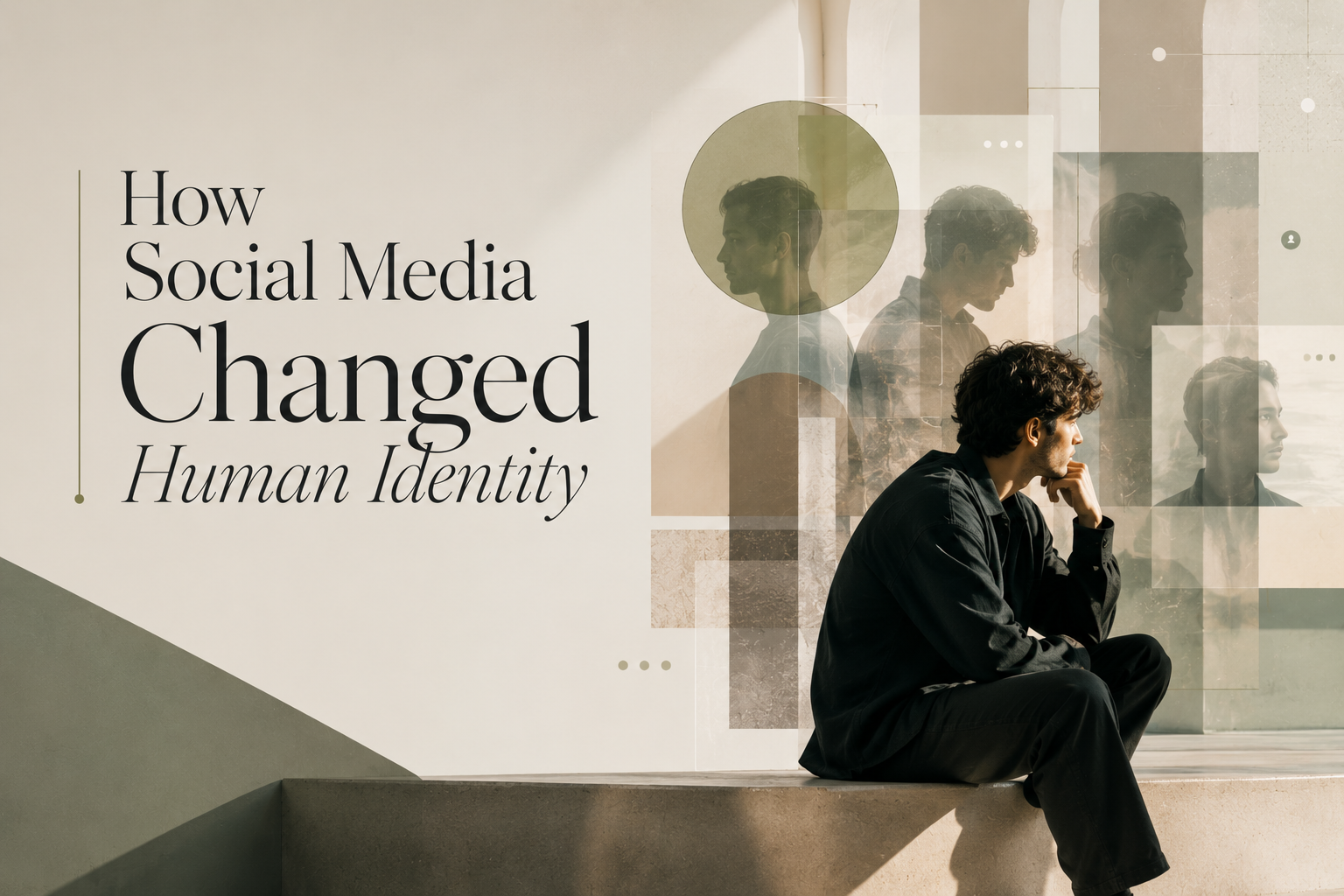
Social media didn’t invent multiple identities. It made them visible.
Your digital identity is simply another version of yourself—but unlike real-life interactions, it can be edited, refined, revisited, and perfected.
It can also remain frozen.
A photograph from five years ago can continue shaping someone’s perception today. Old opinions remain searchable. Past versions of ourselves continue existing long after we’ve changed.
For the first time in history, identity has become an archive.
The Shift From Being Known to Being Seen
There’s an important difference between being known and being visible.
Being known requires depth. Being visible requires exposure.
Social media has made visibility incredibly accessible. Within minutes, someone you’ve never met can learn where you travel, what you wear, what you eat, who you follow, and what causes you support.
But knowing these details doesn’t necessarily mean they know you. Sometimes we’ve mistaken information for understanding.
We assume visibility creates connection. In reality, visibility often creates familiarity—not intimacy.
That distinction matters because human relationships have always been built through shared experiences, not shared algorithms.
Personality Has Become a Creative Project
Perhaps one of the most interesting cultural shifts is that personality itself has become something people consciously curate.
People don’t just ask:
“Who am I?”
They also ask:
“How do I want to be perceived?”
This question influences everything from photographs to language, from fashion choices to playlists, from travel destinations to hobbies.
None of these decisions are random anymore. They’re signals.
Every choice quietly communicates values, aspirations, communities, and beliefs. This is where online self expression becomes more than posting content.
It becomes identity building.
The Pressure to Be Consistent
The internet rewards consistency.
Creators are advised to maintain a consistent tone.
Professionals are encouraged to establish a clear niche.
Brands strive for recognizable identities.
Slowly, people begin applying the same expectations to themselves. But human beings aren’t naturally consistent.
We evolve
We contradict ourselves.
We outgrow opinions.
We discover new interests.
Real identity is fluid. Digital identity often feels permanent.
This tension creates one of the biggest emotional challenges of modern life. Sometimes we hesitate to grow because an older version of ourselves is still visible online.
What Happens When Validation Becomes Part of Identity?
Every notification carries information.
A like suggests approval.
A comment suggests engagement.
A share suggests value.
None of these reactions define who we are. Yet over time, they begin influencing how we see ourselves.
This is one of the subtle insights from social media psychology. External feedback gradually becomes internal belief. When appreciation is consistent, confidence grows. When engagement disappears, self-doubt quietly enters.
The danger isn’t social media itself. The danger is forgetting where our identity ends and audience perception begins.
Personal Branding and the Modern Self
This is why conversations around personal branding have become so important.
At its best, personal branding isn’t about creating a fake version of yourself.
It’s about creating clarity.The goal isn’t performance.
It’s alignment.
A meaningful personal brand reflects your values, perspective, experiences, and personality instead of replacing them.
When branding becomes disconnected from identity, people eventually sense it. But when it grows from genuine self-awareness, it feels effortless. People don’t just notice it. They believe it.
Expert Insight: Identity Is Becoming More Intentional
Perhaps the biggest cultural shift isn’t that people have become more performative.
It’s that people have become more intentional.
Previous generations inherited much of their identity from family, geography, profession, or community.
Today’s generation has unprecedented freedom to define themselves.
That freedom is empowering.
But it’s also exhausting.
Because every decision now feels like part of a larger story we’re constantly writing about ourselves.
The challenge isn’t creating an identity.
It’s remembering that you are always bigger than the version people see online.
Conclusion
Social media didn’t change human nature.
It changed the environment in which identity develops.
We still seek belonging.
We still crave recognition.
We still want to be understood.
What has changed is the speed, scale, and permanence of perception.
Our digital identity now travels faster than we do. It introduces us before conversations begin and often remains after they end.
That makes intentionality important. But it also makes self-awareness even more valuable. Because identities built only for an audience eventually feel heavy.
The identities that last are the ones rooted in something deeper than algorithms—curiosity, values, experiences, and genuine human growth.
Perhaps the real question isn’t, “Who am I online?”
It’s, “Who am I becoming, even when no one is watching?”
FAQs
1. How has social media changed identity?
It has made identity more visible, editable, and influenced by public perception.
2. What is digital identity?
A digital identity is the version of yourself presented through online platforms and digital interactions.
3. How does social media affect identity formation?
It shapes how people express themselves and influences self-perception through constant feedback.
4. Is online identity different from real identity?
It can be, especially when online self-presentation doesn’t reflect real values or experiences.
5. Can social media impact self-image?
Yes. Continuous comparison and public validation can influence confidence and self-worth.
6. Why is personal branding important today?
It helps communicate a clear, authentic identity in an increasingly digital world.
7. How can I build an authentic digital identity?
Focus on self-awareness, consistency, and expressing genuine values instead of chasing trends.