Most people think getting dressed is a practical decision.You open your wardrobe. You pick something appropriate for the day. You leave the house. Simple.
But if clothing were purely functional, we wouldn’t spend so much time thinking about it.We wouldn’t have favorite outfits.We wouldn’t save photos for style inspiration.We wouldn’t feel unusually confident in certain clothes and strangely uncomfortable in others.
The truth is that style has never been just about clothing.It has always been about identity.
Long before we introduce ourselves, our appearance begins telling a story. Not a complete story, but enough to create an impression. The colors we gravitate toward, the silhouettes we choose, the brands we wear, even the details we repeat all become small clues about who we are or who we want to be.
This is where personal style psychology becomes fascinating. Because style is not just something we wear.
It’s something we communicate.
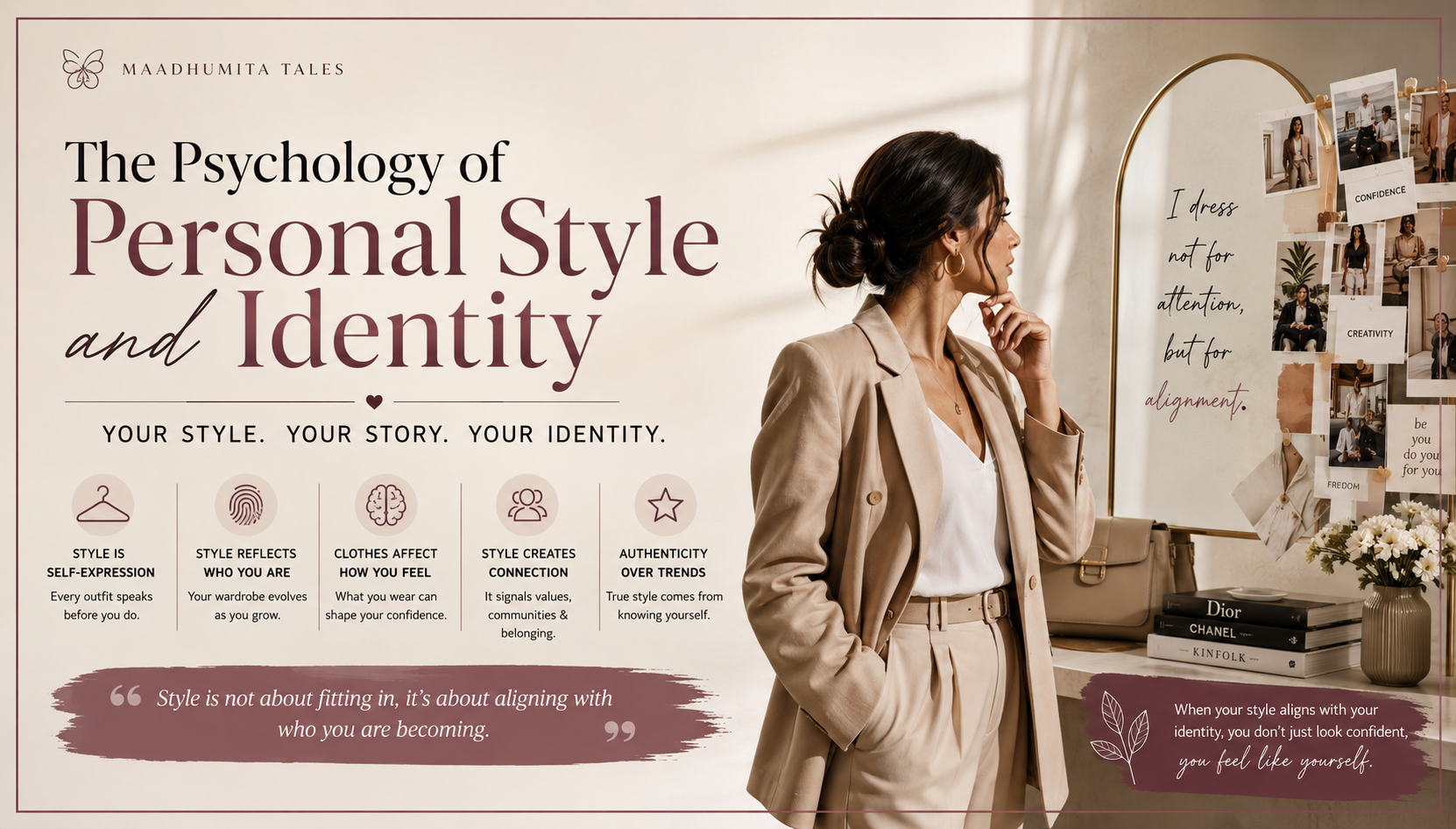
Every Outfit Is a Quiet Form of Self-Expression
Most people don’t wake up thinking, “What message do I want to send today? Yet that’s often what happens subconsciously. The creative professional who prefers relaxed silhouettes. The founder who chooses simplicity over trend. The executive who gravitates toward structure and precision. The artist who treats clothing as an extension of imagination. None of these choices are random.
They are forms of self-expression.
Style becomes a language we speak without words. It helps us communicate aspects of our personality before a conversation even begins And often, the people around us are reading those signals whether they realize it or not.
The Relationship Between Style and Identity
Our style evolves because we evolve. Think about the clothes you wore five years ago. There’s a good chance they reflected a different version of you.
Different priorities.
Different aspirations.
Different experiences.
This is why the relationship between personal identity and style is so closely connected. As our understanding of ourselves changes, our appearance often changes with it. Sometimes style shifts because we’ve grown more confident. Sometimes it changes because we’ve entered a new phase of life. And sometimes it changes because we’re finally allowing ourselves to be seen more honestly.
The wardrobe becomes a reflection of an internal journey.
Why Certain Clothes Make Us Feel Different
Have you ever noticed how some outfits make you stand taller? How certain pieces instantly make you feel more capable, creative, confident, or comfortable? That’s not your imagination.
This is one of the most interesting areas of fashion psychology.
Clothing doesn’t only influence how others perceive us. It can also influence how we perceive ourselves. When what we wear feels aligned with who we are, something shifts internally.
We feel less distracted.
Less self-conscious.
More present.
More ourselves.
Confidence is often discussed as something that comes entirely from within. While that’s true to an extent, our external environment can support or disrupt that confidence.
And clothing is part of that environment.
Style Is Often About Belonging
One reason style matters so much is because human beings naturally seek belonging.
Throughout history, clothing has helped people identify communities, professions, cultures, and values.
Even today, style quietly signals:
- What environments we belong to
- What interests we have
- What values we prioritize
- How we see ourselves
This doesn’t mean style should be used to fit in.
But it does explain why appearance plays such a powerful role in social connection.
People often feel comfortable around familiarity.
And style helps create that familiarity.
The Difference Between Following Trends and Knowing Yourself
Modern culture constantly encourages people to look outward.
New trends emerge every week.
New aesthetics appear every month.
New definitions of what is considered stylish seem to arrive daily.
Yet personal style is rarely discovered by following everyone else.
It is usually discovered through self-awareness. The most interestingly dressed people are not necessarily the trendiest.
They are often the people who understand themselves best.
Their appearance feels authentic because it reflects who they are rather than who they think they should be.
This is one reason why personal style and self-expression remain deeply connected.
When style becomes imitation, it often feels temporary. When it becomes self-expression, it feels natural.
What Image Consulting Is Really About
Many people assume image consulting is about helping someone dress better.
In reality, it’s often about helping someone understand themselves more clearly.
Because style challenges are rarely just style challenges.
They’re often identity challenges.
Someone may know they want to appear more confident but struggle to express that visually.
Someone may have evolved professionally but still dress according to an outdated version of themselves.
Someone may feel disconnected from their appearance because their external image no longer reflects their internal reality.
Style becomes meaningful when it creates alignment.
Not between a person and a trend.
But between a person and themselves.
Expert Insight: Confidence Is Often a Reflection of Alignment
People frequently ask how to become more confident.
The answer is usually more complex than changing clothes.
However, one interesting observation appears again and again.
People tend to feel most confident when there is alignment between:
- Who they are
- How they feel
- How they present themselves
Confidence often grows when there is less friction between identity and appearance.
This is why style is not superficial.
At its best, style helps people feel more like themselves.
And there is something incredibly powerful about that.
Why Personal Style Matters More Than We Realize
We often dismiss style as a surface-level concern. But style influences first impressions.
It influences self-perception.
It influences confidence.
It influences how comfortably we move through the world.
Most importantly, it influences how authentically we feel represented. The question isn’t whether style communicates something. It always does.
The question is whether that communication feels intentional.
Conclusion
Personal style is rarely just about clothing. It is a reflection of identity, self-awareness, confidence, and expression. The pieces we choose become part of the story we tell about ourselves, both to others and to ourselves.
As life changes, style changes. As identity evolves, appearance often evolves alongside it.
Perhaps that’s why style remains so fascinating. Because beneath the fabrics, colors, and aesthetics lies something much deeper. The ongoing human desire to understand who we are and express that understanding to the world.
FAQs
1. What is personal style psychology?
It explores how clothing choices reflect identity, emotions, and human behavior.
2. How does fashion reflect personality?
Style often communicates values, preferences, confidence, and self-expression.
3. Why does personal style matter?
It influences perception, confidence, and how authentically we feel represented.
4. Can clothing affect confidence?
Yes, clothing can influence both self-perception and emotional state.
5. What is the connection between style and identity?
Style often acts as a visual reflection of who we are and how we see ourselves.
6. Is personal style different from fashion trends?
Yes, personal style is rooted in identity, while trends are temporary cultural movements.
7. What role does image consulting play in personal style?
It helps align external appearance with internal identity, goals, and perception.